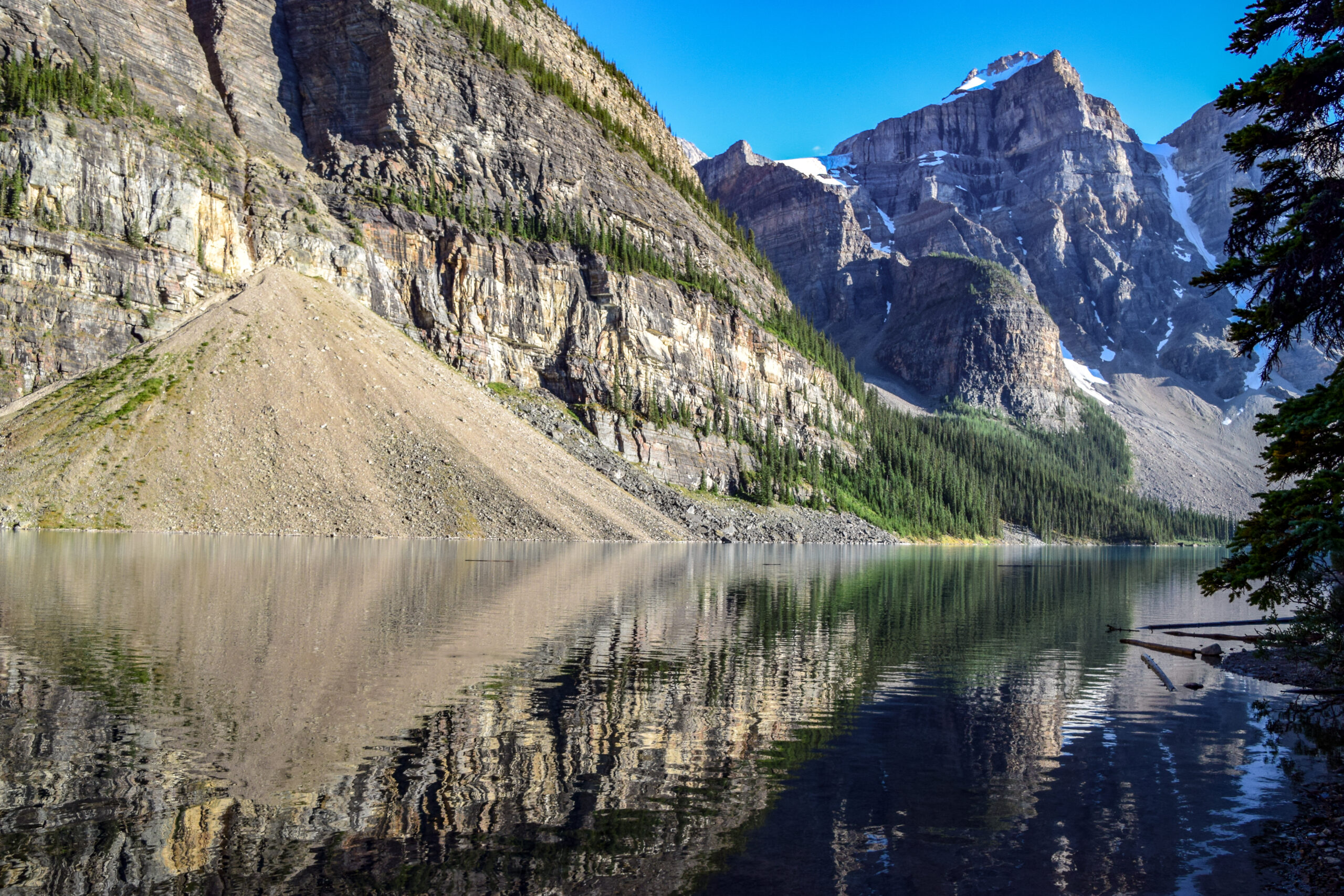
Canada is a country of very different landscapes, cities, and travel experiences. You can spend a morning beside a glacier-fed lake in the Rocky Mountains, explore the streets of a historic city, or watch the tides reshape the coastline along the Bay of Fundy. Choosing where to go depends on how much time you have and what you want to see.
Our guide to the best places to visit in canada brings together 50 destinations across every province and territory, ranked from #50 to #1. It includes major cities, national parks, coastal destinations, and natural landmarks, giving you a starting point for planning a trip anywhere in the country.
The ranking is an editorial selection, not a scientific score or a popularity contest. We consider each destination’s appeal, variety of experiences, and value to travellers. We also review and update the list as destinations and visitor experiences change.
Some entries are among the most famous places in canada, including Niagara Falls and Banff. Others may be less familiar to first-time visitors but deserve consideration when planning a longer trip.
How should you use this guide? If your time is limited, start with the top 10 places to visit in canada. For a more focused trip, explore our regional destination pages for deeper coverage and practical planning ideas. You don’t need to visit all 50; use the rankings to choose the places that fit your interests and itinerary.
50. Salt Spring Island, British Columbia
The largest of BC’s Southern Gulf Islands, known for its Saturday market, artists’ studios, farms, and a laid-back island rhythm a short ferry ride from Vancouver and Victoria. It’s the gentlest possible start to the countdown.
Check hotel prices in Salt Spring Island
49. Charlottetown, Prince Edward Island
PEI’s capital and the Birthplace of Confederation, where the 1864 conference led to the creation of Canada. A small, walkable city of historic streets, a harbourfront, and the province’s best-known restaurants.
Check hotel prices in Charlottetown
48. Magdalen Islands (Îles de la Madeleine), Quebec
A small archipelago in the Gulf of St. Lawrence known for red sandstone cliffs, long sandy beaches, and a slow island pace. Visitors come for cycling, seafood, and beaches that feel nothing like the mainland.
Check hotel prices in Magdalen Islands
47. Kingston, Ontario
A historic limestone city where Lake Ontario meets the St. Lawrence River. It’s the eastern gateway to the Thousand Islands and known for its 19th-century architecture, waterfront, and Fort Henry.
Check hotel prices in Kingston
46. Grasslands National Park, Saskatchewan
One of the few places protecting native Canadian prairie, with wide-open grassland, badlands formations, and free-roaming bison. It offers some of the darkest night skies in the country.
Check hotel prices in Grasslands National Park
45. Waterton Lakes National Park, Alberta
The quieter southern neighbour of Banff and Jasper, where the prairies run straight into the Rockies. It’s known for its chain of lakes, the Prince of Wales Hotel viewpoint, and fewer crowds.
Check hotel prices in Waterton Lakes National Park
44. Dawson City, Yukon
The heart of the Klondike Gold Rush, with wooden boardwalks and preserved frontier-era buildings. Visitors come for gold-rush history, the meeting of the Klondike and Yukon rivers, and the midnight sun.
Check hotel prices in Dawson City
43. Lunenburg, Nova Scotia
A UNESCO World Heritage Site and one of the best-preserved British colonial towns in North America. Its colourful waterfront, working fishing port, and the schooner Bluenose II draw visitors all season.
Check hotel prices in Lunenburg
42. Twillingate & Iceberg Alley, Newfoundland and Labrador
A fishing town on the stretch of coast known as Iceberg Alley, where icebergs drift south past the shore each spring. It’s also a base for whale watching and coastal hiking.
Check hotel prices in Twillingate
41. Butchart Gardens, British Columbia
A group of floral display gardens near Victoria, built in a former limestone quarry. The Sunken Garden is the signature sight, and the gardens draw visitors in every season.
Check hotel prices in Butchart Gardens
40. Killarney & Georgian Bay, Ontario
White quartzite ridges, pink granite shores, and clear blue water on the north side of Georgian Bay. Killarney Provincial Park is a favourite of canoeists, hikers, and painters — the Group of Seven painted here.
Check hotel prices in Killarney
39. Saguenay Fjord, Quebec
One of the longest fjords in the world, where steep cliffs meet the Saguenay River. Beluga whales gather near its mouth, and the fjord’s shores are protected as a national park.
Check hotel prices in Saguenay
38. Niagara-on-the-Lake, Ontario
A well-preserved 19th-century town at the mouth of the Niagara River, famous for the Shaw Festival theatre and the wineries around it. It’s the classic pairing with a trip to the falls.
Check hotel prices in Niagara-on-the-Lake
37. Muskoka, Ontario
Ontario’s best-known cottage country — a region of lakes, granite shorelines, and pine forest north of Toronto. People come to boat, swim, and sit on a dock, and the fall colours are a second season of their own.
36. Yellowknife, Northwest Territories
The territorial capital on the shore of Great Slave Lake, one of the largest lakes in the world. It’s among the best-known places in Canada for northern lights viewing, thanks to its northern latitude and clear skies.
Check hotel prices in Yellowknife
35. Dinosaur Provincial Park, Alberta
A UNESCO World Heritage Site in the Alberta badlands, in one of the richest dinosaur fossil areas ever found. Guided hikes take visitors into terrain that looks like another planet.
Check hotel prices in Dinosaur Provincial Park
34. Haida Gwaii, British Columbia
A remote archipelago off BC’s north coast, home to the Haida Nation and known for ancient totem poles, old-growth rainforest, and SGang Gwaay, a UNESCO World Heritage Site. Getting there is part of the experience.
Check hotel prices in Haida Gwaii
33. Hopewell Rocks & the Bay of Fundy, New Brunswick
The Bay of Fundy is famous for some of the highest tides in the world, and at Hopewell Rocks you can walk on the ocean floor at low tide and kayak around the same flowerpot-shaped rocks hours later.
Check hotel prices in Hopewell Rocks
32. St. John’s, Newfoundland and Labrador
One of the oldest European-settled cities in North America, with brightly coloured row houses, a working harbour, and Signal Hill overlooking the entrance. It’s also a gateway to seabird colonies and iceberg viewing.
Check hotel prices in St. John’s
31. Halifax, Nova Scotia
Atlantic Canada’s largest city, built around one of the world’s great natural harbours. The waterfront boardwalk, the Citadel, and day trips to Peggy’s Cove and Lunenburg make it the region’s natural hub.
30. Tadoussac & Charlevoix, Quebec
Where the Saguenay meets the St. Lawrence — one of the best-known whale-watching areas in Canada, where belugas live year-round. The Charlevoix region behind it adds mountain scenery, art towns, and celebrated local food.
Check hotel prices in Tadoussac
29. Gaspé Peninsula & Percé Rock, Quebec
A mountainous peninsula on the Gulf of St. Lawrence, anchored by Percé Rock, the huge pierced limestone rock just offshore. Forillon National Park at its tip and the drive around the peninsula are the main draws.
28. Peggy’s Cove, Nova Scotia
A small fishing village built on smooth granite rock, with one of the most photographed lighthouses in Canada. It’s an easy day trip from Halifax and still a working fishing community.
Check hotel prices in Peggy’s Cove
27. Mont-Tremblant, Quebec
The best-known ski resort town in eastern Canada, set in the Laurentian Mountains. In summer the pedestrian village, the gondola, and the surrounding national park keep it busy.
Check hotel prices in Mont-Tremblant
26. Bruce Peninsula & Tobermory, Ontario
A finger of limestone between Lake Huron and Georgian Bay, famous for the Grotto’s turquoise water, Flowerpot Island’s sea stacks, and shipwreck diving in Fathom Five National Marine Park.
Check hotel prices in Tobermory
25. Algonquin Provincial Park, Ontario
Ontario’s oldest and most famous provincial park — a vast area of lakes, rivers, and maple forest. Canoe trips, moose sightings, and fall colours are what people come for.
Check hotel prices in Algonquin Provincial Park
24. Thousand Islands, Ontario
An archipelago of well over a thousand islands scattered along the St. Lawrence River between Ontario and New York State. Boat tours, island cottages, and Boldt Castle across the border are the main attractions.
Check hotel prices in Thousand Islands
23. Prince Edward Island — Cavendish & the Green Gables Shore, Prince Edward Island
Canada’s smallest province packs in red-sand beaches, rolling farmland, and the landscapes that inspired Anne of Green Gables. Cavendish and the north shore are where most visitors head first.
Check hotel prices in Cavendish
22. Okanagan Valley & Kelowna, British Columbia
A warm, dry valley of lakes and vineyards in BC’s interior, centred on Okanagan Lake. Wine touring, beaches, and orchard country make it BC’s classic summer escape.
21. Drumheller & the Badlands, Alberta
A town set in a dramatic canyon of striped rock in the Red Deer River valley. It’s Canada’s dinosaur capital — home to the Royal Tyrrell Museum and the hoodoos east of town.
Check hotel prices in Drumheller
20. Winnipeg & The Forks, Manitoba
Manitoba’s capital, where the Red and Assiniboine rivers meet at The Forks, a gathering place with thousands of years of history. The Canadian Museum for Human Rights and the Exchange District are the city’s headline sights.
Check hotel prices in Winnipeg
19. Churchill, Manitoba
A small town on Hudson Bay known around the world as a place to see polar bears in the wild each fall. In summer, beluga whales fill the river, and in winter it’s northern lights territory — reachable only by train or plane.
Check hotel prices in Churchill
18. Gros Morne National Park, Newfoundland and Labrador
A UNESCO World Heritage Site where geology is the attraction: the rust-red Tablelands are a piece of the Earth’s mantle pushed to the surface, and Western Brook Pond is a landlocked fjord between towering cliffs.
Check hotel prices in Gros Morne National Park
17. Cabot Trail, Nova Scotia
A loop drive through the Cape Breton Highlands, regularly counted among the most scenic drives in the world. Coastal lookouts, fishing villages, and highland hiking fill the route.
Check hotel prices in Cabot Trail
16. Yoho National Park, British Columbia
Banff’s BC neighbour, quieter and just as dramatic: Emerald Lake’s green water, the Natural Bridge, and Takakkaw Falls, one of the tallest waterfalls in Canada.
Check hotel prices in Yoho National Park
15. Tofino, British Columbia
A small town at the end of the road on Vancouver Island’s wild west coast. Long surf beaches, storm watching in winter, and the old-growth rainforest of Pacific Rim National Park Reserve are why people make the trip.
14. Whitehorse & Kluane National Park, Yukon
The Yukon’s capital is the gateway to Kluane, a UNESCO World Heritage Site holding Canada’s highest mountain, Mount Logan, and some of the largest non-polar icefields on Earth. Winter brings the northern lights; summer brings nearly endless daylight.
Check hotel prices in Whitehorse
13. Ottawa, Ontario
Canada’s capital, with Parliament Hill, the Rideau Canal (a UNESCO World Heritage Site that becomes a skating rink in winter), and a concentration of national museums. It anchors trips into the Ottawa Valley and Gatineau Park across the river.
12. Victoria, British Columbia
BC’s capital, on the southern tip of Vancouver Island, known for its Inner Harbour, the Parliament Buildings, and a mild climate that fills the city with gardens. Afternoon tea and whale watching are the classic visitor rituals.
Check hotel prices in Victoria
11. Icefields Parkway, Alberta
The highway linking Banff and Jasper past glaciers, turquoise lakes, and some of the biggest mountain scenery in North America. The Columbia Icefield, Peyto Lake, and roadside waterfalls make it a destination in itself, not just a drive.
Check hotel prices in Icefields Parkway
10. Quebec City, Quebec
The only walled city in North America north of Mexico, and a UNESCO World Heritage Site. Old Quebec’s narrow streets, Château Frontenac, and the Plains of Abraham give it a European feel no other Canadian city matches.
Check hotel prices in Quebec City
9. Montreal, Quebec
Canada’s second-largest city and its French-speaking cultural capital: Old Montreal’s cobblestone streets, a festival calendar all summer, and food — from bagels to poutine — that people plan trips around.
Check hotel prices in Montreal
8. Whistler, British Columbia
One of the world’s best-known mountain resorts, built around Whistler and Blackcomb mountains. Winter is for skiing; summer is for the Peak 2 Peak gondola, mountain biking, and the alpine village.
7. Jasper National Park, Alberta
The largest national park in the Canadian Rockies — bigger, darker, and less crowded than its southern neighbours. Maligne Lake, the Columbia Icefield’s edge, and some of the best stargazing in the country are here.
6. Moraine Lake, Alberta
A glacier-fed lake in the Valley of the Ten Peaks whose unreal blue colour made it famous around the world. The Rockpile viewpoint above the shore is one of the most recognizable views in Canada.
Check hotel prices in Moraine Lake
5. Toronto, Ontario
Canada’s largest city — the CN Tower, a waterfront on Lake Ontario, and neighbourhoods that cover most of the world’s cuisines. It’s also the usual base for Niagara day trips.
4. Vancouver, British Columbia
A city squeezed between the Pacific and the Coast Mountains, where you can walk the Stanley Park seawall in the morning and be on a ski hill the same day. Granville Island, the beaches, and the mountain backdrop define it.
3. Lake Louise, Alberta
A turquoise, glacier-fed lake in Banff National Park beneath Victoria Glacier, with the Fairmont Chateau Lake Louise at its shore. Canoeing in summer, skating in winter, and trailheads in every direction — it is the single most iconic lake view in the Canadian Rockies.
Check hotel prices in Lake Louise
2. Niagara Falls, Ontario
Three waterfalls straddling the Canada–US border, and the most famous natural attraction in the country. The Canadian side offers the classic panoramic view of Horseshoe Falls, boat tours into the mist, and a full resort town behind it. It earns its rank on sheer spectacle — nothing else in Canada looks like this.
1. Banff, Alberta
The townsite inside Canada’s first national park, and the anchor of the Canadian Rockies. Sulphur Mountain, the Bow River, and a main street framed by Cascade Mountain — with Lake Louise, Moraine Lake, and the Icefields Parkway all within day-trip range, Banff is where almost every great Canadian mountain trip begins.
The Most Beautiful Places in Canada: Our Picks from the 50
Beauty takes different forms across the country, from mountain lakes to rugged coastlines. These seven destinations stand out among the most beautiful places in canada, each offering a different landscape worth experiencing.
1. Banff, Alberta — #1 in our Top 50. Banff combines dramatic Rocky Mountain scenery with the convenience of a townsite inside Canada’s first national park. It’s an excellent choice for travellers who want mountain landscapes without giving up a comfortable base for exploring.
2. Lake Louise, Alberta — #3 in our Top 50. Lake Louise is known for its turquoise, glacier-fed water beneath Victoria Glacier. The combination of blue water, mountain peaks, and the glacier creates one of the most memorable views in the Canadian Rockies.
3. Moraine Lake, Alberta — #6 in our Top 50. Moraine Lake stands out for its striking blue colour, created by rock flour carried in glacier meltwater. The surrounding mountain scenery makes it especially appealing to photographers and anyone who enjoys dramatic alpine landscapes.
4. Tofino, British Columbia — #15 in our Top 50. Tofino offers a different kind of Canadian scenery: a coastal setting shaped by the Pacific Ocean. It’s a strong choice for travellers who prefer ocean views and a quieter coastal experience over mountain destinations.
5. Cabot Trail, Nova Scotia — #17 in our Top 50. The Cabot Trail is a loop drive through the Cape Breton Highlands, where the journey itself is the attraction. Its combination of coastal scenery and highland landscapes makes it especially rewarding for a scenic road trip.
6. Bruce Peninsula & Tobermory, Ontario — #26 in our Top 50. Bruce Peninsula and Tobermory offer a striking contrast to Ontario’s major cities. Their appeal lies in the combination of waterfront scenery, natural surroundings, and the opportunity to explore a quieter side of the province.
7. Hopewell Rocks & the Bay of Fundy, New Brunswick — #33 in our Top 50. The Bay of Fundy is famous for having some of the highest tides in the world. At Hopewell Rocks, the changing water levels make the coastal landscape especially interesting, offering a natural experience quite different from Canada’s mountains and lakes.
The Best Cities to Visit in Canada (From This List)
Canada’s cities offer different experiences, from large urban centres to smaller provincial capitals and historic destinations. Here are our picks for the best cities to visit in canada, ordered by their position in the full Top 50 ranking.
1. Vancouver, British Columbia — #4 in our Top 50. Best for travellers who want a city break combined with natural scenery. Vancouver is a practical choice if you want to balance urban sightseeing with time outdoors.
2. Toronto, Ontario — #5 in our Top 50. Best for first-time visitors who enjoy major cities. Toronto suits travellers looking for an urban itinerary and a convenient starting point for exploring more of Ontario.
3. Montreal, Quebec — #9 in our Top 50. Best for travellers interested in food, culture, and neighbourhood exploration. Montreal works particularly well for a city-focused trip with time to wander rather than rush between attractions.
4. Quebec City, Quebec — #10 in our Top 50. Best for history and architecture. As the only walled city in North America north of Mexico, Quebec City offers a distinctive historic setting that makes it a particularly appealing choice for a shorter city getaway.
5. Victoria, British Columbia — #12 in our Top 50. Best for travellers who prefer a smaller city with a coastal atmosphere. Victoria offers a more relaxed alternative to a big-city itinerary and works well for a slower-paced getaway.
6. Ottawa, Ontario — #13 in our Top 50. Best for travellers interested in Canadian history and the country’s capital. Ottawa is a good option for a relaxed sightseeing trip, particularly for visitors who enjoy learning about the places they visit.
7. Halifax, Nova Scotia — #31 in our Top 50. Best for a city break with an Atlantic Canadian character. Halifax suits visitors who want to experience an eastern coastal city while exploring more of Nova Scotia.
First Time in Canada?
If this is your first Canadian trip, start with Banff (#1), Lake Louise (#3), Niagara Falls (#2), Toronto (#5), and Quebec City (#10). Together, these five destinations introduce you to the country’s mountain landscapes, famous waterfalls, major-city experiences, and historic architecture. They are spread across different regions, so don’t try to squeeze all five into a short holiday. Choose the destinations closest to your arrival point and save the others for another trip.
Plan your stay
Booking links below are affiliate links — if you book through them, we may earn a commission at no extra cost to you.
Check hotel prices in Vancouver